You know that feeling when you're trying to get ready in your Lafayette bathroom and there's barely room to turn around? You're not alone. Most homeowners in our charming Yamhill Valley town deal with this exact frustration daily. The good news? Professional bathroom remodeling in Lafayette, Oregon can transform even the tiniest spaces into functional, beautiful retreats.
Here's what I've learned after years of helping Lafayette families reclaim their cramped bathrooms: smart design beats square footage every time. These aren't just theoretical concepts either—they're proven strategies that actually work in real Lafayette homes.
Let's Talk About Why Lafayette Bathrooms Are... Cozy
Walk through any neighborhood between Third Street and the old mill district, and you'll notice something. Those beautiful craftsman homes and vintage farmhouses? They were built when bathroom priorities were, well, different. Back in the 1940s and 50s, builders allocated space for function, not comfort. A 5x7 bathroom was considered generous.
The Yamhill Valley's historic housing stock reflects this reality. Space went to kitchens, living areas, and bedrooms. Bathrooms got whatever was left. Now we're asking these small spaces to handle modern routines that would make our grandparents chuckle. Morning prep, skincare routines, storage for towels, toiletries, and cleaning supplies—it's a lot.
Here's What Actually Works (And What Doesn't)
Most people approach small bathroom design backwards. They focus on what to cram in rather than how to create breathing room. After seeing countless Lafayette bathroom transformations, I've noticed three strategies that consistently deliver results:
Vertical thinking means using every inch of wall space—not just the obvious spots. Light manipulation creates visual space that feels just as real as actual square footage. Smart storage makes every corner count without creating clutter.
The mistake? Trying to DIY your way through complex spatial challenges. You know what happens when you guess at fixture placement or wing it with lighting? You end up with a bathroom that feels even smaller than before.
Storage Magic That Actually Fits
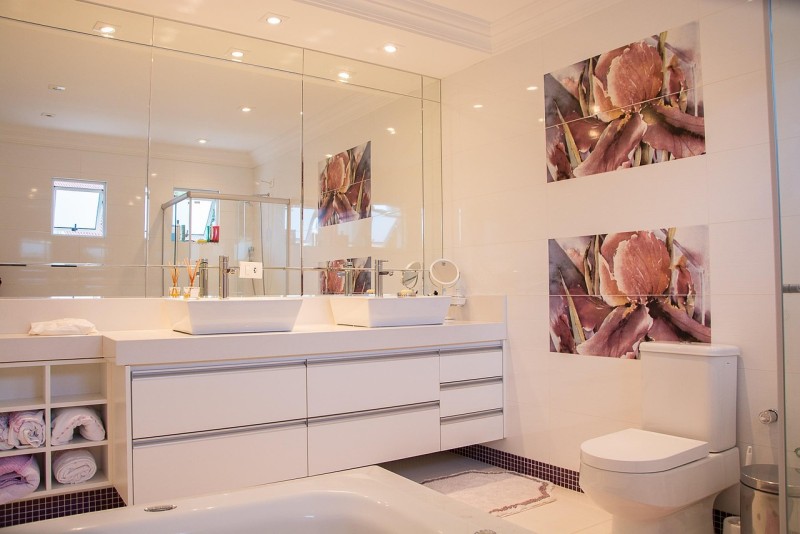
Floating vanities are game-changers in small Lafayette bathrooms. When your vanity appears to hover, your eye travels underneath, creating the illusion of more floor space. Plus, cleaning becomes infinitely easier—something every busy family appreciates.
Think about those 1940s craftsman homes on Third Street. Their original vanities sit heavily on the floor, making compact bathrooms feel cramped. A floating vanity instantly opens up visual space while providing the same storage capacity.
Recessed medicine cabinets steal space from your walls—literally. Instead of protruding into your already-tight bathroom, they nestle between wall studs. Modern versions offer surprising storage depth and built-in lighting.
Over-toilet storage gets a bad rap, but done right, it's brilliant. Skip the cheap plastic shelving units. Instead, consider built-in cabinetry that matches your vanity or floating shelves with clean lines. The key is making it look intentional, not like an afterthought.
Shower niches deserve special mention. Lafayette's older homes often have thick walls perfect for carved-out storage. A properly installed niche eliminates bottles crowding your shower floor while adding a custom, high-end feel.
Making Your Bathroom Feel Bigger Than It Is
Light tricks your brain into perceiving more space. Start with natural light—even in those north-facing Lafayette bathrooms that barely see direct sun. Swap heavy window treatments for light-filtering options that maintain privacy while maximizing daylight.
Layered artificial lighting works wonders. Combine ambient lighting (think recessed ceiling fixtures), task lighting (vanity lights), and accent lighting (maybe LED strips behind mirrors). This creates depth and eliminates harsh shadows that make spaces feel smaller.
Here's something most homeowners miss: mirror placement matters more than size. A large mirror opposite a window reflects outdoor views, borrowing visual space from your yard. Strategic mirror positioning can double your bathroom's apparent size.
Given the Pacific Northwest's lengthy gray seasons, choosing the right light color temperature becomes extra important. Warm white (2700K-3000K) feels cozy but can make small spaces feel closed in. Cool white (3500K-4100K) opens things up without feeling clinical.
The Psychology of Space (It's Not Just About White)
Everyone assumes small bathrooms need white everything. Not necessarily. Light colors do reflect more light, creating openness. But strategic dark accents can actually make spaces feel larger by adding depth and sophistication.
Your tile choices matter enormously. Large-format tiles minimize grout lines, creating cleaner sight lines. Subway tiles laid horizontally stretch walls visually. Hexagonal patterns add interest without overwhelming compact spaces.
Flooring continuity creates flow. When your bathroom floor material matches or closely coordinates with adjacent hallway flooring, boundaries blur. Your bathroom borrows space from neighboring areas.
Paint sheen affects perception too. Satin and semi-gloss finishes reflect more light than flat paint, but they also highlight imperfections. In Lafayette's older homes with less-than-perfect walls, eggshell often provides the best balance.
Working with What You've Got
Lafayette's older homes present unique layout challenges. Doors that swing into tight spaces eat up precious square footage. Pocket doors or barn-style sliding doors free up swing space. Sometimes switching from inward to outward swing makes a surprising difference.
Fixture placement follows function, but small bathrooms demand creativity. Corner sinks maximize floor space in powder rooms. Wall-mounted toilets (yes, they're stable) free up floor area and simplify cleaning. Walk-in showers often work better than tub-shower combos in tight quarters.
Understanding your home's plumbing constraints helps set realistic expectations. Moving major drain lines gets expensive and complicated. But relocating supply lines for new vanity positions? Often totally doable. A skilled contractor can guide you through what's possible within your budget.
The Americans with Disabilities Act guidelines actually help small bathroom design. ADA-compliant fixtures often have sleeker profiles and better clearances than standard versions. Planning for aging in place today means your bathroom works for decades to come.
Honestly, Some Things Need the Pros
Plumbing modifications require permits and expertise. Oregon's building codes protect you, but they also mean DIY electrical work often isn't legal. When you're maximizing every inch, precision matters. A toilet placed two inches wrong can make or break your layout.
All Building Construction understands Lafayette's unique challenges—from dealing with century-old plumbing to working within historic district guidelines. Professional installation means your beautiful design actually functions properly for years to come.
Structural changes need engineering consideration. Removing walls, even partial ones, affects your home's stability. Tile work demands perfect substrate preparation. Waterproofing behind shower surrounds prevents costly damage down the road.
What This Looks Like in Real Life
Last month, I consulted on a 1950s ranch home near Lafayette Elementary. The original 6x8 bathroom felt like a closet. By switching to a floating vanity, adding recessed storage, and installing a frameless glass shower door, we gained nearly 30% more usable space without moving a single wall.
Another project involved a Victorian-era home downtown. The upstairs bathroom was impossibly narrow. Strategic mirror placement, light-colored large-format tiles, and wall-mounted fixtures transformed it from cramped to cozy. The homeowner's exact words: "It feels like we added a whole new room."
These transformations typically take 2-3 weeks from start to finish. The planning phase—measuring, designing, selecting materials—often takes longer than actual construction. But getting the details right upfront prevents costly changes later.
Your Next Steps (Because You're Ready for This)
Start by measuring your current bathroom precisely. Note window locations, existing plumbing, and electrical outlets. Take photos from multiple angles. This information helps professionals provide accurate estimates and realistic timelines.
Ask yourself: What frustrates you most about your current bathroom? Storage? Lighting? Layout? Identifying your biggest pain points helps prioritize improvements within your budget.
Professional bathroom remodeling contractors can show you possibilities you might never have considered. They understand Lafayette's building requirements, local suppliers, and time-tested approaches that work in our climate.
Small bathrooms don't have to feel like punishment. With smart design choices and professional execution, your compact Lafayette bathroom can become a daily retreat you actually enjoy using. The transformation might surprise you—and your guests won't believe it's the same space.