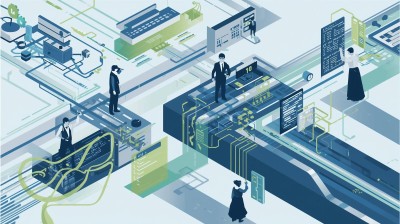
Every growing enterprise encounters several instances of technical debt although they have evolved digitally over the years. It could be in the form of outdated code, fragmented systems, and legacy architectures. This slows innovation and inflates maintenance costs. While modernization is essential, the process is often time-consuming, risky, and resource heavy.
Technical debt in simple terms is the cost incurred upon additional rework, most probably opting for a quick and easy solution to resolve a problem instead of using a more feasible, time-consuming approach. This is often done to meet deadlines or targets but in due course it tends to cause costly reworks. However, quick fixes, outdated dependencies, and patchwork don't seem to work well and become a technical debt.
The software infrastructure is weighed by legacy systems and modernizing them seems to be a herculean task. There comes a need to pay for the technical debt as the hidden intention is always to keep things running smoothly without breaking.
Agentic AI emerges as a new age solution that can act autonomously, learn from past data, analyze contexts, predict anomalies, device strategies, and multi-step plans to resolve tasks.
What is technical debt?
Technical debt is the price that one must pay in future for applying shortcuts to resolve today's problems. In the case of financial debts, if one must pay interest while repaying a loan, here teams may have to incur a huge price for a quick solution over the best one. In due course this interest turns out to be a huge expenditure for a company. Very often this is opted to meet deadlines. Over time, technical debts may bring more frequent issues, slower updates, and more maintenance expenses.
Technical debt in older systems can take many different forms as listed below:
- Outdated frameworks and languages for programming
- Logic that is hardcoded and redundant code
- Lack of documentation or obsolete information
- Inadequate coverage of tests
- Architecture that is not adaptable.
While it may not be always feasible to replace such systems entirely, due to its cost and risk factors. One can certainly try and reduce the technical debt, which is necessary for long-term adaptability.
Agentic AI Explained
Agentic AI are artificial intelligence systems that operate autonomously rather than simply responding to a set of predefined rules. They have the capability of analyzing situations and making judgments to undertake actions.
In contrast to conventional AI models that just react to commands, agentic AI can:
- Establish objectives and make plans for action.
- Examine intricate systems, such as codebases or architectures.
- Perform duties independently or somewhat independently.
- Constantly learn from feedback and improvise with time.
Understanding how these AI systems learn and make decisions requires foundational knowledge in machine learning, neural networks, and data processing. For technical professionals looking to deepen their grasp of the underlying principles that power agentic systems, online AI courses offer structured pathways through supervised learning, reinforcement learning, and model evaluation techniques that form the backbone of autonomous AI behaviour.
We can consider agentic AI as a seasoned, self-directed digital engineer that can analyze software systems, spot problems, and even suggest or carry out safe, ongoing solutions.
Agentic AI and its role with handling technical debts
The following are some direct ways that agentic AI can help legacy systems with their technical debt:
Automated Codebase Analysis
Agentic AI can help with mapping dependencies, identifying duplication, and detecting anti-patterns in millions of lines of code. Using an Agentic data platform, teams can identify regions that are costly or risky to maintain, helping form a clear technical debt inventory.
Perceptive Refactoring
AI agents can help refactor code safely without affecting its external behavior instead of cleaning it up by
- Simplifying intricate methods
- Optimal use of reusable functions
- Cleaning up deprecated API usage.
- Reformatting to make it more readable and consistent
After the above steps are initiated by Agentic AI, it needs to be thoroughly verified by humans as it is vested in the hands of developers to approve these AI-driven modifications. One should be wary of its decisions and follow a human-in-the-loop methodology to balance speed, reliability and safety.
Automating documentation creation
Very often there isn't up-to-date documentation in legacy systems. Hence crucial knowledge gets lost when teams change or even codes evolve. This makes maintenance and modernization slower and riskier. Agentic AI helps in resolving this challenge by autonomously generating and maintaining up-to-date documentation. It thoroughly examines code structures, dependencies, and logic, thereby recording in a language which is readable and easily understood for future use. This helps the users understand the working of systems and the rationale behind certain functionalities.
Testing and quality assurance
Legacy systems tend to accumulate technical debts when there are insufficient testing coverage, manual QA procedures, or outdated scriptures, especially when they fail to keep up with changing business logic. Agentic AI helps in resolving these challenges by automatically detecting testing gaps, creating pertinent test cases, and even running regression tests in response to code changes. Moreover, it improves test efficiency and reliability by forecasting high-risk regions that need urgent attention by examining past defect data and system behavior. They help in validating code quality and early detection of anomalies that eventually help with product stability and prevent further accumulation of new technical debts.
Modernization roadmaps
Agentic AI helps in modernizing legacy systems by aligning business priorities with IT evolution. By analyzing existing legacy infrastructures, recommending modernization paths such as container migration or API integration, and tactfully ranking technical debt areas based on business value, agentic AI can basically act as an intelligent advisor guiding your codebase towards long-term modernization. They prioritize debt reduction and aim at achieving value-driven transformation.
Collaboration between Humans and Agentic AI
The future is about active collaboration between humans and AI. With the emergence of Agentic AI, engineers can enhance their capabilities. Mumbai's thriving tech ecosystem offers excellent AI training options for developers working with autonomous systems. Both Students & Professionals can explore AI Courses in Mumbai to master agentic AI skills alongside human-AI collaboration techniques. By letting AI agents take on the time-consuming, monotonous tasks involved in reducing technical debt, allowing developers to dedicate their time to higher-value activities such as architectural redesign, user experience improvements, and innovation. Above all, it is of utmost importance that human oversight is inevitable. This helps with checking whether AI-made changes adhere to business goals, compliance requirements, and organizational standards.
Benefits of Using Agentic AI to Manage Technical Debt
As technical debt is a time-consuming and costly affair, Agentic AI emerges as a game-changer helping organizations to address these crucial challenges. They efficiently accelerate code cleanup, modernization, and system upgrades. This helps with the reduction of new bugs with continuous monitoring of code quality. Agentic AI ensures that changes align with existing logic. Agentic AI solutions provide intelligent suggestions and automated fixes, giving room for developers to focus on innovation instead of repetitive maintenance. Agentic AI also enhances their learning capabilities with every iteration and adapts testing or refactoring strategies over time. The data-driven insights that help with decision-making can predict the stability of software functioning, thereby detecting problem areas and suggesting preventative measures to avoid future technical debts. Hence, it helps in turning legacy systems from a complicated, high-maintenance hassle into a solid, scalable, and innovative basis apt for the future.
Conclusion
As we understand that technical debt is unavoidable in any growing organization, the way we manage it keeps changing with technological advancement. Previously, we relied on reactive fixes and costly rewrites. The procedure was often time-consuming. Now Agentic AI plays a proactive role in enabling a more strategic, intelligent approach to paying down technical debt.
With its high-end capabilities like automated documentation, intelligent testing, and guided modernization roadmaps, Agentic AI not only helps teams reduce existing debt but also prevents new debt from accumulating. The result is a stronger, more resilient future-ready system that supports scalability, security, and innovation.
Author Bio
Sarah Abraham is a technology enthusiast and seasoned writer with a keen interest in transforming complex systems into smart, connected solutions. She has deep knowledge in digital transformation trends and frequently explores how emerging technologies like AI, edge computing, and 5G, intersect with IoT to shape the future of innovation. When she’s not writing or consulting, she’s tinkering with the latest connected devices or the evolving IoT landscape.